


Choosing a Telescopic Hydraulic Cylinder Manufacturer
June 8, 2026
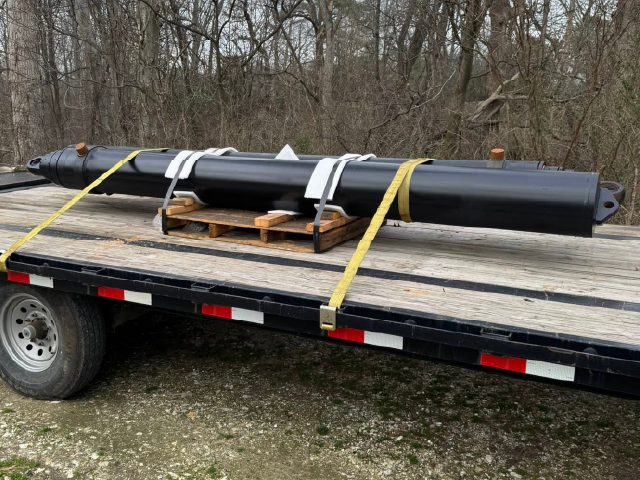
A telescopic hydraulic cylinder manufacturer is not just supplying a component. In bulk unloading equipment, that cylinder often determines lift performance, cycle consistency, structural stability, and how much downtime your operation absorbs when conditions are less than ideal. If the application involves high cycle counts, abrasive material, uneven loading, or harsh outdoor service, cylinder quality shows up quickly in production numbers and maintenance records.
That is why buying on bore and stroke alone is rarely enough. For truck dumpers, trailer tilters, container tippers, and other heavy-duty unloading systems, the cylinder has to match the full operating environment. That includes the load profile, mounting geometry, hydraulic pressure range, extension speed, side loading risk, and the realities of field maintenance. A manufacturer that understands those variables will deliver a very different result from one that treats telescopic cylinders as a catalog item.
What a telescopic hydraulic cylinder manufacturer should really provide
A telescopic cylinder is designed to deliver long stroke in a compact retracted length. That basic advantage makes it well suited for dumping and tilting equipment where installed space is limited but vertical or angular travel requirements are high. In practice, however, long stroke creates design demands that are not forgiving. Stage overlap, wall thickness, seal design, bearing surfaces, gland fit, and porting all affect service life and lift behavior.
A capable telescopic hydraulic cylinder manufacturer should be able to discuss those details in relation to your equipment, not just in relation to a generic pressure rating. In real industrial service, the cylinder must work as part of a larger mechanical system. If the trunnion location, pivot points, frame rigidity, and center of gravity are not considered together, even a well-built cylinder can end up in a poor application.
That is especially true in bulk material handling. Wet sludge, compacted scrap, green waste, wood residuals, agricultural byproducts, and mixed recyclables do not behave like uniform test loads. Material can bridge, shift late, or concentrate to one side. Those conditions increase side loading and shock loading, which means the cylinder design and the surrounding structure have to be engineered with margin.
The difference between commodity cylinders and application-built cylinders
Not every buyer needs a fully custom design. Some operations are replacing an existing unit with known dimensions and established performance requirements. In those cases, a standard or near-standard telescopic cylinder may be the right choice if the manufacturer controls quality and can verify compatibility.
But many industrial unloading systems are not standard in the field, even when they look standard on paper. Mounting envelopes may be tight. Existing hydraulic power units may operate within a narrow pressure band. Duty cycles may be higher than the original system was designed for. Corrosion exposure may have shortened service life on chrome surfaces, seals, or pins. In those situations, a commodity replacement can create repeat failures rather than solve them.
An application-focused manufacturer starts by asking how the cylinder is being used. What material is being moved? What is the loaded weight, not just the nominal capacity? How often does the unit cycle per shift? Is the lift smooth from initial breakout through full extension, or does it hesitate under load? Is the equipment exposed to washdown, road salts, abrasive fines, or seasonal temperature swings? Those questions matter because they point to cylinder stage design, metallurgy, seal selection, surface finish, and structural support requirements.
Key engineering factors that affect performance
Stroke length gets attention first, but it is only one variable. A long stroke that fits the machine but lacks sufficient column strength can become a reliability problem. Bore size, stage sequence, operating pressure, and closed length all need to be balanced against the actual lifting geometry.
Retraction and extension behavior also matter. Some applications need controlled dumping speed to protect the frame, hinge area, and receiving equipment. Others need enough extension force at the early part of the stroke to break loose material that has settled or frozen in place. A manufacturer with real experience in dumpers and tilters will account for force curves across the lift, not just maximum theoretical force at full pressure.
Seal design is another area where quality differences show up fast. In heavy-duty industrial service, contamination is expected, not occasional. Rod wipers, internal sealing materials, bearing guidance, and machining tolerances all affect whether a cylinder keeps operating cleanly over time or starts bypassing, leaking, and scoring stages. The cheapest cylinder is often the one that leaves the operation paying for lost production a few months later.
Side loading deserves special attention. Telescopic cylinders perform best under properly aligned loads. If the machine structure allows twisting, or if the load regularly shifts off center, the cylinder can be forced to absorb stress it was not meant to carry. That does not always mean the cylinder is wrong. Sometimes it means the manufacturer should be involved in reviewing mount design, frame stiffness, pivot details, or the need for a different cylinder configuration.
Why in-house manufacturing control matters
Industrial buyers often hear that a cylinder is built to spec. The more useful question is who controls the steps that determine whether the spec is met consistently. Machining quality, welding practices where applicable, stage fit, straightness, surface finishing, assembly tolerances, and pressure testing all influence field performance.
A manufacturer with in-house control is generally in a stronger position to hold tolerances, monitor quality, and make practical design adjustments when an application calls for it. That matters if your operation needs repeatability across multiple units or if you are solving a recurring failure tied to a specific duty cycle. It also matters when replacement timing is tight and communication between design, fabrication, and assembly cannot afford to be fragmented.
For many B2B buyers, domestic manufacturing is also a support issue, not just a sourcing preference. U.S.-built equipment can simplify communication, quality oversight, and replacement planning, especially for operations that cannot afford long delays tied to offshore production or generic import inventory.
Questions to ask a telescopic hydraulic cylinder manufacturer
A serious manufacturer should be able to answer practical questions without resorting to vague claims. Ask how the cylinder is sized for your actual geometry, what safety margin is built into the design, and how the expected duty cycle affects material and seal choices. Ask whether the unit is intended as a direct replacement or whether the manufacturer sees risks in the current setup.
It is also reasonable to ask about inspection and testing. Pressure testing is expected, but it should not be the only checkpoint. Buyers should want confidence in machining consistency, dimensional verification, and assembly quality. If the cylinder is going into a critical dumper or tilter, support after installation matters too. Troubleshooting should include hydraulic and structural considerations, not just a recommendation to replace seals and monitor performance.
Lead time should be discussed realistically. A fast delivery promise has little value if the cylinder arrives without the design attention the application requires. On the other hand, not every project needs a long custom engineering cycle. A good manufacturer will separate true custom work from cases where a proven design can be adapted efficiently.
Where customization creates real value
Customization is useful when it solves a known operating problem or improves fit, life, or safety. It is less useful when it adds complexity without measurable benefit. The best manufacturers know the difference.
In unloading equipment, customization often pays off in mounting configuration, stroke optimization, pressure tuning, corrosion resistance, and stage design suited to the load path. Some facilities need cylinders engineered around difficult space constraints. Others need heavier construction because the material is dense, wet, or prone to sudden movement. Some need better service access so maintenance crews can work faster and safer.
This is where a specialized manufacturer stands apart. A company that builds cylinders in the context of truck dumpers, trailer tilters, container tippers, and related hydraulic systems can evaluate the cylinder as part of the machine. American International Inc operates in that exact environment, where cylinder performance is tied directly to unloading efficiency, structural durability, and jobsite safety.
Choosing for life-cycle cost, not purchase price
Every procurement team has a budget, and price matters. But in heavy industrial service, the better comparison is life-cycle cost. A lower purchase price may still be the expensive option if it leads to shorter service intervals, inconsistent lifting, production interruptions, or premature damage to surrounding equipment.
A well-built telescopic cylinder should support dependable throughput and predictable maintenance planning. That means fewer unplanned outages, less troubleshooting at the hydraulic power unit, and less wear on frames and hinge systems caused by poor lift control or misapplied force. Over time, those factors usually outweigh the initial savings attached to a lightly built replacement.
The best buying decision is usually the one that matches the cylinder to the application with enough engineering discipline to avoid repeat problems. If a manufacturer can explain how the design fits your load, your machine, and your operating conditions, that conversation is worth more than a low quote with limited technical backing.
When you evaluate your next cylinder supplier, look for a manufacturer that treats performance in the field as the real specification. That is where service life is proven, and that is where the right decision keeps your operation moving.

