


Custom Bulk Unloading Systems That Fit
June 9, 2026
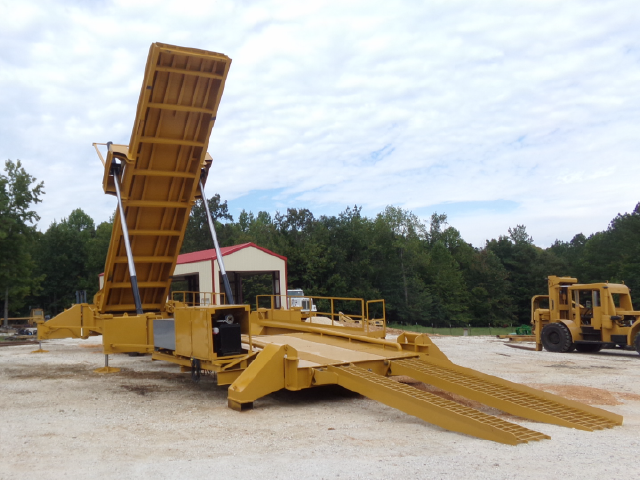
A bulk unloading line usually looks adequate on paper right up until the first difficult load shows up. Wet bark bridges in the trailer. Demolition debris hangs in a container. A hopper floods faster than downstream equipment can recover. That is where custom bulk unloading systems earn their place. They are built around actual material behavior, real site constraints, and the operating pace the facility needs to maintain.
For industrial operators, the difference between a standard unit and a custom-engineered system is rarely cosmetic. It shows up in cycle time, cleanup labor, maintenance frequency, and safety exposure. If the material is inconsistent, abrasive, stringy, frozen, high-volume, or prone to packing, the unloading system has to do more than tip a truck. It has to control flow, protect equipment, and keep the operation moving.
Why custom bulk unloading systems matter
In many facilities, unloading is treated as a single machine purchase. In practice, it is a system problem. The dumper or tilter has to work with the trailer dimensions, the material density, the receiving hopper, the hydraulic power unit, the discharge height, and the downstream conveyors or processing equipment. If one part is mismatched, the whole line pays for it.
A custom approach starts by recognizing that bulk materials do not behave the same way. Wood waste, grain, compost, scrap, municipal solid waste, sludge cake, and aggregate all place different demands on the machine structure and the discharge area. Some materials pour cleanly. Others rat-hole, bridge, clump, or surge. A standard configuration may handle ideal loads, but heavy-duty operations are rarely dealing with ideal loads every day.
Customization also matters when the site itself creates constraints. Limited ceiling height, tight truck approach angles, uneven foundations, or a need for semi-portable equipment can all change what is practical. In those cases, forcing a standard machine into a nonstandard environment usually leads to compromises that reduce throughput or increase operator intervention.
Where standard equipment falls short
Standard unloading equipment has a place. If the material is uniform, the duty cycle is moderate, and the site layout is forgiving, a standard truck dumper or trailer tilter can perform well. The trade-off is that standardized equipment is designed around average conditions, not problem conditions.
That gap becomes obvious in high-tonnage or difficult-material operations. A unit may be structurally capable of lifting the load but still fail to unload it efficiently because the tipping angle is wrong for the material, the hopper opening is undersized, or the discharge transition causes buildup. Maintenance teams often end up solving these issues with manual cleaning, improvised liners, slower cycle times, or repeated repairs.
Those workarounds carry costs that do not always appear in the original equipment quote. Unplanned downtime, extra loader time, spillage, and higher labor requirements can make a lower-cost standard solution more expensive over the life of the system.
What changes in a custom-engineered system
Custom bulk unloading systems are not just standard machines with a few optional features added. In a properly engineered design, the key operating variables are considered together. That usually includes load dimensions, gross vehicle weights, material characteristics, target cycle times, discharge elevation, and receiving equipment capacity.
The machine structure may need reinforcement for higher duty cycles or uneven load distribution. The hydraulic package may need to be sized for faster lifting, smoother control, or cold-weather operation. The cylinder geometry may be adjusted to reach the required dump angle without overstressing the frame. Hopper walls, liners, and grizzlies may be configured around impact loads and material flow rather than generic dimensions.
Safety systems are often part of the customization as well. Depending on the operation, that can mean wheel guides, load positioning aids, interlocks, operator control locations, containment features, or guarding designed for the way trucks actually approach and unload at the site. In a busy industrial yard, safety depends as much on predictable equipment behavior as on procedural compliance.
The design inputs that actually matter
Material type is the starting point, but it is not the only factor. Moisture content can change unloading behavior more than nominal material category. Green wood chips and dry chips do not act the same. Mixed C&D debris can vary dramatically load to load. Recyclables may include bulky items that hang up at transition points. A system designed without accounting for that variation will often perform well only under best-case conditions.
Truck and trailer details matter just as much. Trailer length, wall construction, rear door configuration, and axle placement can all affect how the load shifts during tipping. A system may need specific platform dimensions, hold-down arrangements, or approach geometry to accommodate the fleet safely and consistently.
Then there is throughput. Some facilities unload a few trucks per day. Others need continuous, predictable turnover across multiple shifts. Higher throughput changes the design equation. It can justify heavier structural sections, larger hydraulic reservoirs, upgraded wear components, and receiving hoppers sized to prevent backups. If the operation is expected to grow, designing only for current volume can create an avoidable bottleneck.
Common configurations for demanding operations
Truck dumpers and trailer tippers are often the core of the system, but they are only one part of the unloading process. In some applications, container tippers are the better fit because the material is received in detachable containers rather than highway trailers. In others, semi-portable units make more sense where the unloading point needs to move with the jobsite or operation.
The receiving side is equally important. A heavy-duty hopper has to absorb impact, contain spillage, and meter material into the next stage at a controlled rate. For abrasive or sticky products, liner selection and hopper geometry can have a direct effect on cleanup frequency and wear life. Telescopic cylinders and hydraulic pumping units also need to be matched to the load profile and expected cycle demand rather than treated as generic components.
This is where a manufacturer with in-house design and fabrication control has a practical advantage. It is easier to adapt structural details, hydraulic systems, and accessory components when the equipment is being engineered and built as a unified package instead of assembled from loosely matched catalog parts.
Throughput, uptime, and maintenance trade-offs
There is no single best unloading system for every plant because every decision involves trade-offs. A steeper dump angle may improve discharge for difficult materials, but it can require more structural capacity and site clearance. A larger hopper may reduce truck wait time, but it also increases footprint and foundation demands. Faster cycle times can raise throughput, but they may also increase wear if the system is not designed for that duty level.
That is why engineering discipline matters. The goal is not to maximize one specification in isolation. It is to balance unloading performance, structural life, serviceability, and operator safety for the actual application. A buyer evaluating capital equipment should ask how the design handles off-spec loads, how wear points are addressed, and what happens when the material does not flow as expected.
Maintenance access deserves more attention than it often gets during procurement. Hydraulic components, pivot points, liners, and wear surfaces all require inspection and service over time. If access is poor, simple maintenance takes longer, and preventive work tends to be delayed. For industrial facilities running tight schedules, serviceability is part of system performance.
How to evaluate a supplier for custom bulk unloading systems
A supplier should be able to talk in detail about application variables, not just equipment categories. That means discussing material flow behavior, foundation requirements, hydraulic sizing, structural loading, controls, and integration with receiving equipment. If the conversation stays at the level of generic payload capacity, the design process is probably not deep enough for a demanding application.
It also helps to work with a manufacturer that understands replacement and retrofit realities. Many facilities are not building from scratch. They are trying to improve an existing unloading area with fixed elevations, legacy conveyors, and established traffic patterns. Customization in those cases is often about solving around constraints, not designing a perfect greenfield layout.
American International Inc operates in that practical space - building heavy-duty unloading equipment for industrial buyers who need systems matched to real operating conditions, not theoretical ones. That kind of specialization matters when uptime and safety depend on details most general equipment vendors tend to overlook.
The best custom solution is usually the one that removes the daily irritation points operators have learned to work around. If a system unloads difficult material cleanly, protects downstream equipment, and stands up to the duty cycle without constant intervention, it is doing exactly what it should. For facilities that move bulk material every day, that is not a luxury feature. It is the foundation of a reliable operation.
When you evaluate your next unloading project, start with the problem load, the tightest site constraint, and the busiest day of production. That is where the right system proves its value.

