


How Hydraulic Truck Dumpers Work
June 17, 2026
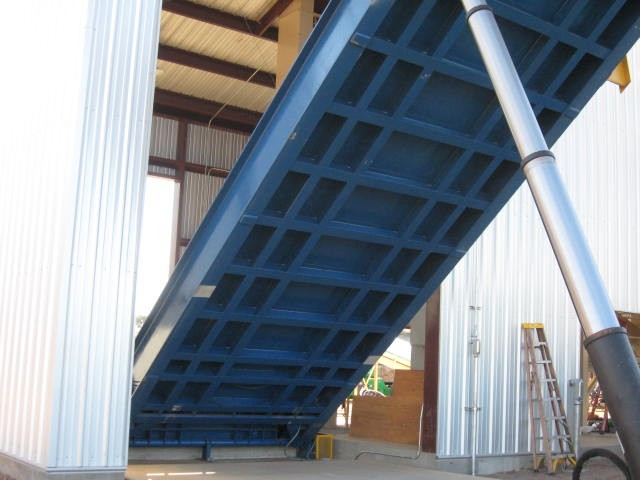
A stuck load at the discharge point can turn a routine unloading cycle into lost production, added labor, and unnecessary risk. That is exactly why understanding how hydraulic truck dumpers work matters to plant managers, engineers, and operations teams responsible for moving bulk material efficiently. A properly engineered dumper does more than raise a truck or trailer - it applies controlled lifting force, manages load behavior, and unloads material in a way that fits the realities of the site.
Hydraulic truck dumpers are built to tilt an entire truck, trailer, or container so bulk material flows out by gravity. In industrial settings, that can include wood waste, refuse, recyclables, grain, aggregate, biomass, scrap, sludge, and other materials that do not unload cleanly through conventional methods. The hydraulic system supplies the force. The steel structure supports the load. The controls and safety components make the motion predictable and repeatable.
How hydraulic truck dumpers work in basic terms
At the most basic level, a hydraulic truck dumper converts fluid power into lifting motion. Hydraulic oil is pressurized by a power unit and directed into one or more cylinders. As the cylinder extends, it pushes against the dump platform or frame, causing the bed to rise to a specified angle. Once the load reaches the required tipping position, gravity takes over and the material exits the vehicle. The hydraulic system then reverses flow, allowing the platform to lower in a controlled manner.
That basic sequence sounds straightforward, but the engineering behind it is what separates dependable industrial equipment from light-duty lifting machinery. The dumper has to handle changing load centers, uneven material distribution, dynamic force during startup and stopping, and repeated heavy cycles over a long service life. It also has to match the truck type, payload, material flow characteristics, and site layout.
The main components that make the system work
Every hydraulic truck dumper relies on the same core systems, even though layouts vary by application.
Structural frame and platform
The frame carries the full weight of the vehicle and payload during the dump cycle. It has to resist bending, twisting, and shock loading while maintaining alignment. The dump platform or rails support the truck tires or trailer body and pivot from a fixed end. In high-capacity applications, structural design is not just about strength on paper. It is about managing stress over years of real-world operation.
Hydraulic cylinders
The cylinders are the primary lifting devices. When hydraulic pressure enters the cylinder barrel, the piston and rod extend, creating the force needed to raise the loaded platform. Cylinder size, stroke length, mounting geometry, and pressure rating determine how much lifting capacity the system can generate and how the force changes throughout the lift.
This is one area where geometry matters as much as raw hydraulic pressure. A cylinder may produce substantial force, but the effective lifting force depends on the angle at which that force is applied to the platform. Early in the lift, when the platform is still low, the system typically needs the most force. As the angle increases, the leverage often improves.
Hydraulic power unit
The power unit includes the electric motor or engine drive, hydraulic pump, reservoir, valves, filters, and associated plumbing. This assembly creates and controls oil flow to the cylinders. In stationary industrial dumpers, electric power units are common because they support repeatable operation and easier integration into facility systems.
Pump selection affects speed and performance. A higher flow rate can shorten cycle time, but only if the rest of the hydraulic circuit, cylinder design, and structure are built for it. Faster is not always better. With difficult materials or unstable loads, controlled motion may be more valuable than maximum speed.
Controls and instrumentation
Operators use a control system to raise, hold, and lower the dumper. Depending on the installation, controls may be simple push-button stations or more advanced panels integrated with interlocks, sensors, and facility automation. Pressure monitoring, position indication, and limit controls help maintain safe operating conditions and consistent unloading.
Safety restraints and support systems
A truck dumper is not only lifting a payload. It is lifting a vehicle that may shift if not properly secured. Wheel stops, hold-downs, approach guides, platform restraints, and safety interlocks are used to keep the truck or trailer positioned correctly during operation. In many applications, these systems are just as critical as the hydraulic components.
What happens during a dump cycle
A typical unloading cycle starts when the truck is positioned on the platform and secured. The operator verifies that the vehicle is aligned, the discharge area is clear, and any restraints are engaged. Once the cycle begins, the hydraulic power unit sends pressurized oil into the lift cylinders.
As the cylinders extend, the platform pivots upward from the hinge end. During the first portion of travel, the system overcomes the heaviest effective load because it is lifting both the vehicle and the material from a low angle. As the dump angle increases, material begins to break free and move toward the discharge end. Depending on the material, this flow may be immediate and smooth, or it may require a steeper angle to release fully.
That is where application-specific design becomes important. Wet fines, stringy waste, compacted recyclables, and fibrous biomass do not behave the same way as dry grain or free-flowing aggregate. Some loads bridge. Some cling to the body. Some shift suddenly. The dumper has to be engineered for those conditions, including the target dump angle, structural reserve, and hydraulic control needed to manage the unloading event.
Once the material clears, the system lowers the platform in a controlled descent. Oil exits the cylinders through the valve circuit and returns to the reservoir. The operator releases the restraints, and the vehicle exits.
Why dump angle and cylinder geometry matter
When buyers ask how hydraulic truck dumpers work, they are often really asking what determines whether a dumper will unload their material reliably. Two of the biggest factors are dump angle and cylinder geometry.
Dump angle controls how much help gravity can provide. Some materials unload at relatively modest angles. Others need much steeper elevation to break loose and clear the body. Designing for too little angle can leave residual material in the truck, which creates cleanup work and slows throughput. Designing for more angle than necessary can increase structural demands, foundation requirements, and cycle complexity. The right answer depends on the application.
Cylinder geometry affects force throughout the lift. Because the cylinder push point moves in relation to the platform pivot, lifting leverage changes continuously. A system that looks adequate by peak pressure alone may still struggle at the start of the cycle if geometry is poor. That is why experienced manufacturers model the full motion, not just the end position.
Safety and reliability are built into the design
In industrial unloading, safety is tied directly to engineering discipline. A dumper has to control motion under full load, not just under ideal conditions. That means accounting for off-center loading, frame deflection, pressure spikes, hose routing, mechanical stops, and operator interaction.
Well-designed systems typically include pressure relief protection, positive holding controls, stable pivot design, and safeguards that prevent operation unless the truck is properly positioned. Facilities may also require guarding, lockout provisions, emergency stop functions, and integration with downstream conveyors or hoppers.
Reliability comes from the same approach. Heavy-duty steel fabrication, correctly sized cylinders, clean hydraulic plumbing, proper filtration, and serviceable component layout all affect long-term uptime. For operations that unload every day, maintenance access is not a minor detail. Filters, pins, hoses, power units, and wear points should be accessible without turning routine service into a shutdown event.
How hydraulic truck dumpers work for different applications
Not every hydraulic truck dumper works in exactly the same configuration. A short-wheelbase dump truck, a live-floor trailer, a sealed container, and a high-capacity walking-floor substitute all present different loading conditions and site constraints.
In a recycling operation, the equipment may need to manage light but bulky material that shifts unpredictably. In aggregate or mining support, the issue may be concentrated load and abrasive wear. In forestry or biomass, stringy material and bridging can dictate steeper angles and special receiving hopper design. In waste handling, corrosion resistance and washdown considerations may carry as much weight as lift capacity.
That is why custom engineering often matters more than a catalog rating. American International Inc, for example, operates in this part of the market where standard dumpers and application-specific systems are built around the actual truck, material, and unloading environment rather than a generic use case.
What buyers should evaluate before specifying a system
The best dumper is not simply the one with the highest stated capacity. It is the one matched to the full operating condition. That includes payload, axle spacing, tire contact points, center of gravity, required throughput, material behavior, duty cycle, site power, discharge height, and foundation constraints.
It also includes the less obvious questions. Will operators be unloading multiple truck types on the same platform? Is the load likely to freeze, compact, or bridge? Does the receiving hopper need dust control or metered discharge downstream? Will the dumper operate indoors, outdoors, or in corrosive conditions? Those details affect structural design, controls, and the hydraulic package.
A dependable system should raise the load with controlled force, unload the material consistently, and return the platform to service without unnecessary stress on the machine or the operator. That is the real answer to how hydraulic truck dumpers work. They work by combining hydraulic force, structural engineering, and application-specific design into a controlled gravity unloading system built for repeated industrial use.
If you are evaluating a dumper for a demanding operation, the right starting point is not a standard spec sheet. It is a clear look at the material, the vehicle, and the production demands the equipment has to support day after day.

