


Truck Dumper vs Truck Tipper
June 27, 2026
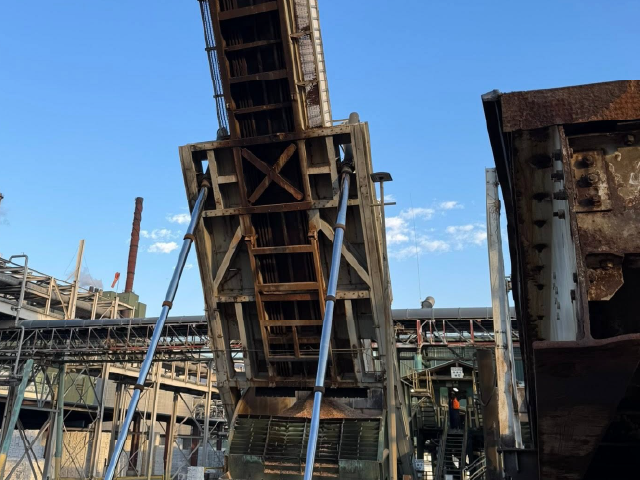
When a facility is moving high volumes of bulk material every day, the truck dumper vs truck tipper question is not a matter of terminology alone. It affects cycle times, site layout, material flow, operator safety, maintenance access, and the long-term reliability of the unloading system. For operations handling wood waste, recyclables, agricultural products, sludge, aggregate, or other difficult loads, choosing the wrong platform can create bottlenecks that are expensive to live with.
In many industrial settings, the terms are used interchangeably. That is understandable, but it can also blur important equipment differences. Buyers evaluating capital equipment need to look past the label and focus on how the machine lifts, supports, receives, and discharges the load under real operating conditions.
Truck dumper vs truck tipper: is there a real difference?
Sometimes yes, and sometimes no. In the market, both terms can describe hydraulic equipment that raises a truck, trailer, or container to unload bulk material by gravity. Some manufacturers use truck dumper as a broader category and truck tipper as a more application-specific term. Others use tipper for certain trailer tilting systems and dumper for heavier, more engineered unloading platforms.
That means the better question is not which word is correct. The better question is what type of unloading equipment your operation actually needs.
A truck dumper often refers to a heavy-duty platform system designed to elevate an entire vehicle or trailer to a controlled dumping angle. These systems are commonly integrated with hoppers, receiving pits, retaining walls, safety restraints, and hydraulic power units sized for repeated industrial duty.
A truck tipper may refer to a similar machine, but in some applications it describes a tilting frame intended for specific truck bodies, trailers, or containers where the tipping action is the main focus rather than a fully integrated dump station. Depending on the supplier, the distinction may be based on frame style, rated capacity, or the kind of vehicle being unloaded.
For a buyer, that language matters less than the engineering details behind it.
What matters more than the name
The performance of the system depends on five practical factors: load type, payload, vehicle configuration, receiving method, and required throughput. If those are not defined clearly at the start, the truck dumper vs truck tipper comparison becomes too generic to be useful.
Material characteristics come first. Free-flowing grain behaves very differently than wet bark, stringy green waste, compacted recyclables, or sticky sludge. A load that bridges or clings to the body may require a steeper tilt angle, more controlled platform motion, or hopper geometry designed to keep the material moving after discharge.
Vehicle configuration is just as important. A short wheelbase straight truck presents a different support and center-of-gravity condition than a long live-floor trailer, walking floor trailer, transfer trailer, or container chassis. The lifting platform, wheel stops, approach ramps, and hold-down or restraint features all need to match the vehicle that will be on the machine every day.
Throughput often separates a light-duty tipping concept from a true industrial unloading system. If your operation is processing truck after truck in continuous shifts, the hydraulic package, structural design, and wear components need to support that duty cycle. That is where engineered systems earn their value.
How truck dumpers are typically used
Truck dumpers are commonly selected for fixed-site, high-volume unloading where the facility wants a dedicated station built around repeatable material intake. In these environments, the dumper is part of a larger system rather than a standalone lifting table.
A plant receiving biomass, wood chips, recycled material, agricultural commodities, or industrial byproducts may use a truck dumper to raise incoming vehicles and discharge into a hopper at a controlled elevation. The hopper then meters material into conveyors, feeders, or downstream processing equipment. In this setup, the dumper is only one piece of the process, but it is a critical one because uptime at the receiving point drives the rest of the line.
These systems are often engineered for heavier payloads, harsher environments, and more difficult unloading conditions. Structural rigidity, cylinder sizing, deck design, and hydraulic controls matter because the machine is expected to work daily under substantial load and exposure.
How truck tippers are typically used
Truck tippers are often associated with applications where the goal is straightforward gravity unloading from a truck or trailer with a tilting frame that fits the vehicle and discharge pattern. In some cases, the installation is simpler. In others, the tipper is still a highly engineered machine, especially when the material is inconsistent or the unloading area has space constraints.
A tipper may be well suited for operations that unload fewer vehicle types, have a more predictable material stream, or need a tilting solution designed around a particular body style. For example, some facilities know exactly what trailer dimensions, axle positions, and discharge points they need to accommodate. In those cases, a tipper can be designed with a focused set of operating parameters.
The key point is this: a tipper is not automatically lighter-duty, and a dumper is not automatically more capable. The application defines the machine.
Truck dumper vs truck tipper for safety and control
Safety is where broad product labels become especially unhelpful. Any hydraulic unloading equipment must manage shifting loads, changing center of gravity, vehicle positioning, and safe material discharge. The right design depends on the risk profile of the application.
For high-capacity industrial operations, safety features may include wheel guides, wheel chocks, vehicle restraints, platform locks, controlled lift and lower sequences, emergency stops, maintenance supports, and hopper interfaces that reduce spillage and cleanup around the unloading zone. If the material is prone to hang up and then release suddenly, the structure and controls must be designed for that behavior.
The operating environment also matters. Outdoor installations, freezing conditions, mud, corrosive material, or abrasive fines can all influence platform construction and hydraulic system protection. A machine that looks adequate on paper may perform poorly if those realities were not considered during design.
This is one reason many buyers prefer application-specific systems rather than generic equipment. Safety and durability are closely tied to how accurately the manufacturer understands the unloading environment.
Maintenance, uptime, and life-cycle value
Most experienced buyers know that purchase price is only one part of the decision. The real cost shows up over years of service.
A properly engineered truck dumper or truck tipper should be built for maintenance access, cylinder serviceability, hydraulic reliability, structural longevity, and predictable wear management. If critical components are difficult to inspect or replace, downtime grows. If the frame is underbuilt for the duty cycle, fatigue issues will eventually surface. If the hopper and discharge geometry are wrong, operators spend time clearing blockages instead of moving material.
This is why fabrication quality and manufacturing control matter. Heavy plate construction, proper weld procedures, quality hydraulic components, and design experience in bulk unloading applications all contribute to equipment that holds up in the field. For industrial users, that is a much more meaningful differentiator than whether a brochure says dumper or tipper.
How to choose the right system
The best way to evaluate truck dumper vs truck tipper options is to define the application in operating terms, not product labels. Start with the material. Identify whether it is free-flowing, sticky, abrasive, oversized, lightweight, compacted, or prone to bridging. Then document the vehicles, payload ranges, unloading frequency, and how the material must be received after discharge.
From there, look at site constraints. Grade changes, available footprint, hopper depth, traffic flow, and indoor versus outdoor installation all affect system design. So does the level of automation required. Some operations need simple operator-controlled tipping. Others need integrated controls that coordinate with conveyors, metering devices, or process equipment.
It also helps to ask how much variation the system must handle. If multiple trailer styles or inconsistent materials are involved, a custom-engineered solution is usually the safer long-term choice. American International Inc builds this type of equipment for demanding unloading environments where standard configurations are not always enough.
The better buying question
Instead of asking whether a truck dumper is better than a truck tipper, ask which system is engineered for your material, your vehicles, and your throughput requirements. In some cases, the answer will be a heavy-duty dump platform with integrated receiving equipment. In others, it will be a tipping system tailored to a specific truck or trailer configuration.
The strongest solution is the one that unloads consistently, protects operators, fits the site, and keeps production moving without constant adjustment. When the equipment is matched correctly to the application, the terminology becomes less important than the result at the receiving point.
If you are evaluating unloading equipment, the most useful first step is to define the problem in detail. Good engineering starts there, and so does better performance in the field.

