


Truck Unloading Safety Checklist That Works
June 24, 2026
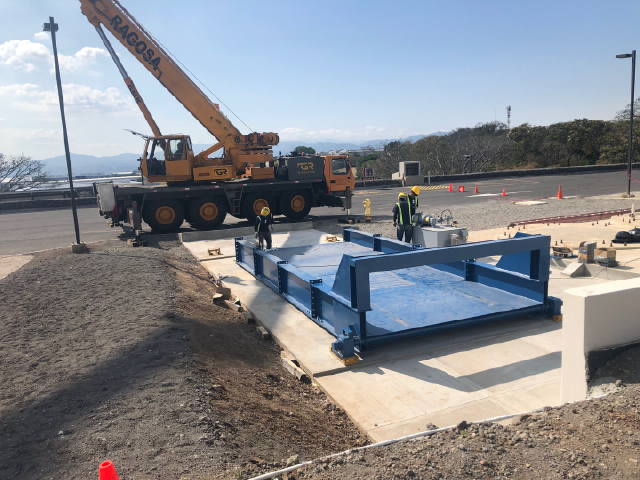
A truck unloading safety checklist is only useful if it reflects real site conditions, actual material behavior, and the equipment doing the work. On bulk material sites, unloading hazards rarely come from one obvious mistake. They come from small failures stacking up - poor trailer positioning, unstable ground, wet or frozen material, uneven load distribution, rushed communication, or equipment used outside its intended limits.
That is why effective unloading safety has to be treated as a system, not a form. Plant managers, maintenance leaders, and operations teams need a checklist that verifies the truck, the material, the unloading area, and the dumping equipment before the load ever starts to move.
What a truck unloading safety checklist should actually control
In industrial unloading environments, the highest-risk moments happen when the load shifts and the center of gravity changes faster than the operator expects. A trailer that looks stable at ground level can become unstable within seconds once elevation begins. If the material is bridged, frozen, compacted, or hung up on one side, the truck or trailer can twist under load, and that creates rollover risk, structural stress, and danger to nearby personnel.
A useful checklist should control four things. First, it should confirm that the unloading surface and surrounding area are suitable. Second, it should verify that the truck, trailer, or container is mechanically ready to unload. Third, it should account for the specific material being discharged. Fourth, it should establish clear operator procedures, including stop conditions.
When any of those four areas are treated casually, the checklist becomes paperwork instead of risk control.
Pre-unloading site checks
Before a driver backs into position or a dumper cycle begins, the unloading zone needs to be verified. Ground conditions matter more than many facilities admit. Soft fill, frost heave, standing water, accumulated debris, or broken concrete can create uneven support under wheels, outriggers, or unloading equipment. Even a slight side-to-side difference can become critical once the body or trailer is elevated.
The area should also be checked for overhead obstructions, pinch points, and personnel exposure. Conveyor structures, catwalks, utility lines, and hopper framing can all interfere with raised bodies or moving trailers. The unloading path needs enough clearance for alignment, elevation, discharge, and exit without forcing sudden steering corrections.
Traffic control is part of the same safety check. Mixed vehicle flow around hoppers, dump pits, or trailer tippers increases the chance of communication failures. If spotters are used, their role has to be defined before unloading starts. If spotters are not used, the driver and operator still need a clear, consistent signaling method.
Equipment and vehicle inspection before unloading
The truck unloading safety checklist should then move to the vehicle and the unloading equipment. This is where many near-misses start, especially when a facility assumes the incoming vehicle is in acceptable condition because it arrived under its own power.
The truck or trailer should be inspected for visible structural damage, tire condition, suspension issues, leaking hydraulics, and proper gate or door function. A damaged frame, uneven tire inflation, or a tailgate that does not release cleanly can all affect load discharge. If the load cannot exit freely, material may hang up and shift the unit off balance during elevation.
For fixed or semi-portable dumping equipment, operators should verify hydraulic pressure, cylinder condition, hinge points, locking mechanisms, controls, and safety interlocks. Any sign of erratic lift behavior, unusual vibration, or delayed response should stop the cycle until the issue is corrected. In heavy-duty unloading systems, reliability is not just a productivity issue. It is a stability issue.
Wheel chocks, restraints, guide rails, and positioning stops should be checked as well. These are simple components, but they often carry the burden of keeping a vehicle aligned while the load is moving. If they are worn, missing, or not suited to the truck configuration, the entire unloading sequence becomes less predictable.
Material behavior is part of the checklist
Not all bulk materials unload the same way, even in the same trailer. Sand, wood waste, sludge, compost, recyclables, aggregate, agricultural products, and shredded industrial material all behave differently under angle and vibration. Moisture content, freezing, compaction, particle size, and contamination can completely change how the load releases.
That means the checklist should identify the material and note any known discharge issues before lifting begins. Has the material bridged in the past? Is it prone to sticking to sidewalls? Does it contain oversized pieces that can jam a gate or create uneven discharge? Has weather changed the way it flows?
This is where generic procedures fail. A site handling dry grain one week and wet biomass the next should not rely on the same unloading assumptions. Material-specific risk is one of the strongest reasons industrial facilities invest in engineered dumpers, tippers, and hoppers designed around the actual product stream rather than a nominal load rating.
Truck unloading safety checklist for operators
Operators need a sequence they can repeat without improvising. The exact process depends on the equipment, but the logic should stay consistent.
The vehicle must be properly centered and secured before any lift begins. The driver should confirm that the trailer is fully in position, the discharge path is clear, and all personnel are out of the hazard zone. Doors or gates should be opened only when the equipment and receiving area are ready for discharge.
Once lift begins, the operator should watch for early warning signs instead of focusing only on the final dump angle. These signs include twisting, wheel lift on one side, delayed material movement, jerking motion, frame distortion, or an off-center discharge pattern. If the load is not releasing evenly, continued elevation may increase the risk rather than solve it.
Stop conditions should be explicit. If the trailer shifts, the material hangs up, a hydraulic component behaves abnormally, or the truck moves out of alignment, the cycle should be halted and evaluated. A forced unload is rarely worth the structural and safety consequences.
Common stop-work triggers
A short list helps here because these are conditions teams need to recognize immediately:
- Uneven ground support or wheel sink
- Visible trailer twist or body lean
- Material bridging or partial discharge
- Gate, door, or latch malfunction
- Hydraulic leaks, pressure loss, or erratic lift speed
- Personnel entering the unloading zone
These are not minor exceptions. They are direct indicators that unloading conditions are no longer controlled.
Training and supervision matter more than paperwork
Even a well-built checklist fails if crews treat unloading as routine. Experienced operators can become the most vulnerable to normalization of risk because they have seen small irregularities before and completed the unload anyway. That mindset is common in high-throughput facilities where delays are expensive.
Training should focus less on memorizing the form and more on understanding why instability develops. Operators should know how center of gravity changes during lift, how different materials behave, and why minor alignment errors become major risks at elevation. Supervisors should reinforce that stopping a cycle is acceptable when conditions are wrong.
For facilities with multiple truck types, containers, or material streams, training should be configuration-specific. A walking floor trailer, end dump, live-bottom unit, and hydraulic trailer tipper each introduce different hazards and decision points. One standard briefing for all of them is usually too broad to be effective.
Using engineered equipment to reduce checklist failures
A checklist is necessary, but equipment design still carries much of the risk. In difficult unloading environments, the safest operation is often the one that depends least on operator compensation. Heavy-duty frame construction, stable support geometry, controlled lift motion, proper restraint systems, and application-specific hopper interfaces all reduce the chances that a routine unloading issue turns into a shutdown or injury event.
That is especially true when facilities handle sticky, dense, off-center, or inconsistent loads. Standardized equipment can work well in uniform conditions, but demanding operations often need custom engineering to manage trailer dimensions, discharge heights, load variability, and site layout constraints. American International Inc builds systems for those conditions because safe throughput in bulk unloading usually comes from matching the equipment to the application rather than forcing the application to fit a generic machine.
Keeping the checklist current
The best truck unloading safety checklist is updated after incidents, near-misses, maintenance findings, and operating changes. If a site adds a new supplier, changes material blends, moves a hopper, or starts unloading in winter conditions, the checklist should change with it. Static documents age quickly in active industrial operations.
Reviewing unloading events with operators and maintenance personnel often reveals problems that management reports miss. A recurring issue with hang-ups, alignment, tire loading, or gate release may not look serious in isolation, but over time it points to a design or process weakness that needs correction.
A good checklist does not slow down production. It protects production from preventable failures. When unloading is treated as an engineered process instead of a basic truck task, safety and throughput usually improve together. The right goal is not just getting the load out. It is getting the load out predictably, every time, under real operating conditions.

