


How to Choose a Container Tipper Manufacturer
June 6, 2026
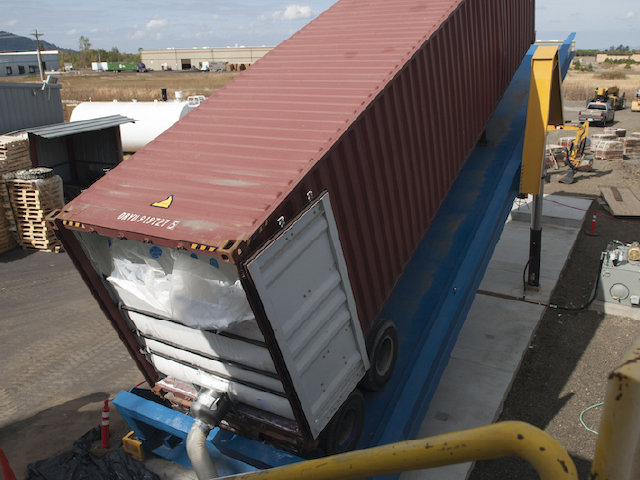
A container tipper manufacturer does more than build a steel frame with hydraulic power. The right manufacturer is solving a material handling problem that affects throughput, labor, maintenance time, and safety every day your operation runs. If your facility unloads dense, wet, abrasive, stringy, frozen, or inconsistent material, the difference between a standard machine and a properly engineered tipper shows up quickly on the floor.
For industrial buyers, the purchase decision is rarely about rated capacity alone. A container tipper has to match the actual container geometry, the material behavior, the site layout, the cycle expectations, and the way your operators work. When those details are ignored, facilities end up with bridging, incomplete discharge, excessive wear, hydraulic issues, or loading and unloading steps that slow the entire line.
What a container tipper manufacturer should really deliver
At a basic level, container tippers lift and tilt bins, carts, boxes, and other bulk containers to discharge material into hoppers, conveyors, process equipment, or receiving pits. In practice, the application can vary widely. A recycling operation handling mixed material presents a very different challenge than an agricultural processor moving free-flowing product, or a waste facility unloading heavy, wet organics.
That is why manufacturing capability matters. A qualified container tipper manufacturer should be able to evaluate more than lifting force. The design has to account for container size and weight distribution, center of gravity during the tipping arc, discharge height, structural loading, hydraulic control, anchoring, guarding, and interface requirements with downstream equipment.
In many plants, the tipper is not a stand-alone machine. It is one part of a larger unloading system. The receiving hopper opening, conveyor speed, operator access, floor condition, and available overhead clearance all influence what the finished machine should look like. A manufacturer that understands system integration will catch issues before the equipment reaches the site.
Why engineering depth matters in container tipper manufacturing
Not all material unloading environments are forgiving. Heavy commercial and industrial operations often run high cycles, process difficult material, and expect equipment to perform under constant exposure to moisture, impact, dust, corrosion, or outdoor conditions. In those settings, engineering depth is not a luxury. It is what separates dependable production equipment from a recurring maintenance problem.
A strong container tipper manufacturer starts with application data. That includes container dimensions, loaded weight, material type, discharge requirements, desired cycle time, utility availability, and site constraints. From there, the manufacturer can determine cylinder sizing, hydraulic pressure requirements, frame construction, pivot design, safety features, and control configuration.
This is also where trade-offs need to be discussed clearly. Faster cycle times can improve throughput, but they may increase shock loading if the discharge process is not controlled. Heavier structural members improve durability, but they can affect installation requirements and cost. A higher discharge angle may improve material release for sticky loads, but it can demand additional clearance and guarding. Good manufacturers do not avoid these conversations. They engineer around them.
Key design factors to evaluate
When comparing manufacturers, structural design should be one of the first areas reviewed. Industrial tipping equipment is exposed to repeated dynamic loading, not just static weight. Weld quality, frame reinforcement, cylinder mounting, pivot points, and base design all influence long-term performance. A machine that looks acceptable on paper can still fail early if the structural details are underbuilt for the application.
Hydraulic design is equally important. The power unit, cylinders, hose routing, valves, and control logic should be selected for reliable performance in your operating environment. If the machine will run outdoors in varying temperatures, that affects fluid selection and system response. If your operation requires frequent cycling, heat management and component sizing become more important. The hydraulic package should be matched to the duty cycle, not just the maximum lifting event.
Container retention and operator safety also deserve careful review. Depending on the application, the tipper may need mechanical restraints, hold-down systems, side containment, interlocked guarding, emergency stops, and controls positioned for clear line of sight. Facilities often focus on discharge capacity first, but safe loading and safe unloading are just as important.
The interface with upstream and downstream equipment should not be treated as an afterthought. If the discharge point is poorly aligned with a hopper or conveyor, you can create spillage, cleanup time, and unnecessary operator intervention. The best result usually comes from a manufacturer that asks detailed questions about the entire unloading process, not just the tipper itself.
Standard equipment vs custom-built systems
Some applications are well served by a standard container tipper, especially when material flows consistently and container sizes are uniform. Standardization can reduce lead time, simplify quoting, and make budgeting easier. For operations with predictable loads and straightforward installation conditions, that may be the right path.
Custom engineering becomes more valuable when the material is difficult, the containers are nonstandard, or the plant layout creates restrictions. Facilities handling sludge, scrap, wood waste, recyclables, agricultural byproducts, or other irregular bulk materials often need a tipper designed around the actual unloading challenge. That can mean a different platform size, a modified discharge angle, added hopper integration, reinforced construction, specialized controls, or access features for operators and maintenance staff.
A manufacturer with in-house engineering and fabrication capability is usually better positioned to deliver these adjustments without losing control of quality. That matters because customization is only useful when it improves function, safety, and serviceability. Poorly managed customization can create support issues later. Well-executed customization solves the problem at the source.
How to assess a container tipper manufacturer
A serious industrial buyer should evaluate the manufacturer as closely as the machine. Experience with bulk unloading applications matters because real-world material behavior does not always match assumptions. Wet material sticks. Abrasive material accelerates wear. Mixed loads discharge unevenly. Containers arrive damaged or inconsistent. A manufacturer that has seen these conditions before can design for them.
Manufacturing control is another major factor. Companies that design and build in-house generally have better visibility into material selection, fabrication quality, fit-up, hydraulic assembly, and final testing. That does not guarantee a better machine by itself, but it improves consistency and accountability.
Ask how the manufacturer handles application review, engineering approval, fabrication, testing, and installation support. Ask what information they need from your team before design begins. Ask how service parts are handled and whether replacement cylinders, hydraulic components, and structural repairs can be supported over time. Capital equipment should be evaluated for life-cycle value, not just purchase price.
For many buyers, U.S.-based manufacturing also matters. Domestic production can support communication, quality oversight, lead time management, replacement part access, and compliance with internal sourcing requirements. For operations where downtime is expensive, support responsiveness carries real value.
Common mistakes in manufacturer selection
One of the most common mistakes is buying based on lift capacity alone. Capacity is important, but it is only one part of the application. A tipper can be rated for the load and still perform poorly if the container fit is wrong, the discharge angle is insufficient, or the receiving system is not designed to accept the material efficiently.
Another mistake is underestimating installation conditions. Floor strength, anchoring requirements, electrical service, hydraulic unit placement, guarding, and access clearances all affect the final success of the project. Early coordination prevents field modifications that add cost and delay startup.
Buyers also sometimes overlook maintenance access. Components that are hard to reach tend to be neglected, especially in busy operations. A well-designed machine should allow practical access for inspection, lubrication, hose replacement, and hydraulic service.
The value of an application-driven partner
The best container tipper manufacturer is not simply the one with the broadest catalog. It is the one that can translate your unloading requirements into equipment that performs reliably in your actual operating environment. That requires engineering judgment, manufacturing discipline, and a willingness to tailor the design when the application demands it.
For operations handling bulk materials every day, the gains are practical. Better unloading consistency supports throughput. Properly designed controls and guarding support safer operation. Heavy-duty construction reduces avoidable structural and hydraulic failures. Custom fit to the material and process reduces manual intervention, cleanup, and downtime.
American International Inc operates in that part of the market where standard answers are often not enough. Industrial unloading systems have to work under real production conditions, and equipment should be built with that expectation from the start.
If you are evaluating manufacturers, start with the operating problem, not the catalog page. The right supplier will ask better questions before offering a solution, and that usually leads to equipment that keeps earning its place long after startup.

