


Choosing a Hydraulic Truck Dumper Manufacturer
June 2, 2026
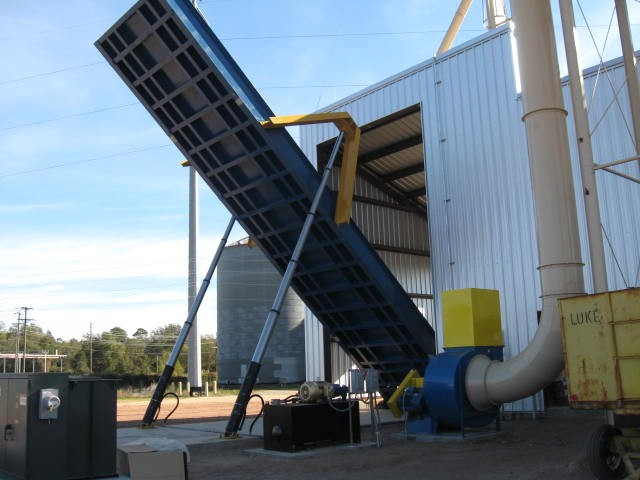
When a dumping system becomes the bottleneck, the cost shows up fast - trucks waiting in line, operators working around inconsistent discharge, and maintenance teams spending too much time keeping worn equipment alive. That is why selecting a hydraulic truck dumper manufacturer is not just a sourcing task. It is an operational decision that affects throughput, safety, uptime, and long-term cost per ton.
In bulk material handling, dumpers and tippers are not interchangeable commodities. Material characteristics, truck configurations, site constraints, and production targets all change what the right system looks like. A manufacturer that understands those variables can design equipment that fits the application. A supplier that only offers a standard platform may still have a place, but only when the unloading conditions are predictable and the operating demands are light.
What a hydraulic truck dumper manufacturer should actually deliver
At a basic level, a truck dumper uses hydraulic power to raise a truck, trailer, or container to a controlled angle so material can discharge by gravity. In practice, the equipment has to do much more than lift. It has to manage uneven loads, resist structural fatigue, maintain platform stability, and handle repeat cycles under abrasive, wet, frozen, sticky, or irregular material flow conditions.
That is where manufacturing depth matters. A capable hydraulic truck dumper manufacturer should control the critical parts of engineering and fabrication, not simply assemble purchased components into a frame. Structural design, cylinder sizing, hydraulic power unit integration, hinge and pivot construction, and control logic all affect how the machine performs after years of use, not just during startup.
For industrial buyers, the real question is not whether a dumper can raise a truck. Most can. The question is whether it can do so safely, consistently, and with minimal downtime in the exact environment where it will operate.
Why application knowledge matters as much as equipment specs
A dumper used for wood residuals does not face the same conditions as one unloading aggregate, municipal solid waste, recyclables, grain, sludge, scrap, or mixed bulk material. Density, bridging tendencies, moisture content, contamination, and load variability all influence platform size, lift angle, cylinder design, hold-down requirements, hopper integration, and discharge control.
This is where many evaluations go wrong. Buyers compare lift capacity and deck dimensions, but overlook the relationship between material behavior and system design. A unit sized correctly on paper can still underperform if the material hangs up, discharges unevenly, or shocks the structure during release.
An experienced manufacturer will ask detailed questions early. What material is being unloaded? What is the truck or trailer configuration? How many cycles per hour are expected? What are the site grade conditions? Is there an existing pit, hopper, or conveyor system? Is the operation indoors or exposed to weather? Those questions are not sales formalities. They are the basis of correct equipment design.
Evaluating hydraulic truck dumper manufacturer capabilities
The strongest manufacturers tend to stand out in four areas: engineering discipline, fabrication quality, hydraulic system design, and customization capability.
Engineering discipline shows up in how the equipment is sized and documented. Buyers should expect clear structural criteria, defined operating limits, and a design process that addresses truck geometry, center of gravity, load distribution, and cycle demands. Generic claims about heavy-duty construction are not enough. The design should reflect the actual application.
Fabrication quality matters because truck dumpers live under repeated stress. Weld quality, frame alignment, deck reinforcement, hinge fabrication, and material thickness all influence fatigue life. For high-cycle or high-impact use, poor fabrication does not stay hidden for long.
Hydraulic system design is another separator. The power unit, cylinders, valving, controls, and safety devices have to work as a system. Fast cycle times are useful, but not if they create instability or hard stops that accelerate wear. Controlled motion, predictable lifting, and serviceable hydraulic layouts are more important than headline speed.
Customization capability is often the deciding factor. Many facilities are working around existing infrastructure, unusual trailer lengths, restricted footprints, or difficult materials. In those cases, a standard dumper may require compromises that reduce efficiency. A manufacturer with in-house engineering and fabrication can adapt deck size, lift height, loading approach, hopper interface, controls, and support structures to fit the operation instead of forcing the operation to fit the machine.
Standard equipment versus custom-engineered systems
There is nothing wrong with standardization when the application supports it. A standard hydraulic truck dumper can reduce lead time, simplify quoting, and provide a proven platform for routine unloading conditions. For operations with consistent truck types and free-flowing materials, that may be the right answer.
But difficult applications rarely stay within standard limits. Mixed loads, sticky products, non-uniform trailers, high daily volumes, and integrated downstream handling systems often justify a custom-engineered solution. Customization may involve stronger structural members, modified deck lengths, specialized hold-downs, larger hoppers, telescopic cylinder arrangements, or controls tailored to site safety procedures.
The trade-off is straightforward. Standard units can be simpler to buy. Custom systems are often better to operate when the unloading environment is demanding. The right choice depends on how much risk the buyer is willing to carry in throughput, maintenance, and operator intervention.
Safety should be designed into the dumper, not added later
For plant managers and operations leaders, safety performance is part of equipment performance. A truck dumper handles large moving loads at high forces. Stability, restraint, access, controls, and structural predictability are not optional features.
A well-designed dumper should account for truck positioning, tire support, center-of-gravity shifts, and controlled lift sequencing. It should also integrate with the surrounding process. If the hopper is undersized, if discharge is erratic, or if operators need to intervene manually, the safety risk increases quickly.
Maintenance access matters as well. Hydraulic components, pivot points, and wear areas should be accessible for inspection and service. Equipment that is difficult to maintain often becomes equipment that is not maintained on schedule.
An engineering-driven manufacturer will treat safety as a design requirement tied to the application, not as a generic checklist. That approach generally produces better long-term results than relying on field modifications after installation.
Made-in-the-USA manufacturing and why buyers still care
For industrial capital equipment, domestic manufacturing is not just a preference issue. It affects quality control, communication, replacement parts support, and the ability to address application changes without long delays. Buyers who depend on dumping systems for daily throughput usually want direct access to the people who understand the machine's design.
Made-in-the-USA manufacturing can also support tighter fabrication oversight and faster coordination between engineering and production. That matters when a project includes custom dimensions, integrated hoppers, hydraulic power units, or site-specific mounting requirements. Problems are easier to solve when the manufacturer controls the process rather than outsourcing key elements across multiple vendors.
For many facilities, the practical value is simple: fewer disconnects between what was specified, what was built, and what arrives on site.
Questions to ask before selecting a hydraulic truck dumper manufacturer
The best conversations with manufacturers are specific. Ask what materials the equipment has been designed to unload and how the design changes for abrasive, wet, or bridging products. Ask whether the frame, deck, and hydraulic package are engineered in-house. Ask how the system handles uneven loading and repeated cycle fatigue.
It is also worth asking about integration. Will the dumper feed an existing hopper or conveyor? Can the controls be matched to plant requirements? What service points are exposed for routine maintenance? How are replacement cylinders, hydraulic components, and structural parts supported after commissioning?
A serious manufacturer should be able to answer these questions clearly and without resorting to vague generalities. At American International Inc, that engineering-first approach is central to how dumping and tipping systems are built for industrial use.
The best manufacturer is the one that fits your operation
There is no single specification that defines the right hydraulic truck dumper manufacturer. The right fit depends on your material, your trucks, your site, your required cycle rate, and your tolerance for downtime. Some operations need a standard heavy-duty dumper that can be installed and put to work quickly. Others need a purpose-built system designed around difficult unloading conditions and existing plant constraints.
The manufacturers worth considering are the ones that understand that difference. They ask better questions, engineer for the real load case, and build equipment meant to hold up under industrial service rather than look acceptable on a quote sheet.
If your unloading process has to perform every shift, the smartest buying decision is usually the one that starts with the application and works backward to the machine. That is how you end up with equipment that keeps material moving instead of creating another problem to manage.

