


How to Evaluate Truck Tipper Manufacturers
June 19, 2026
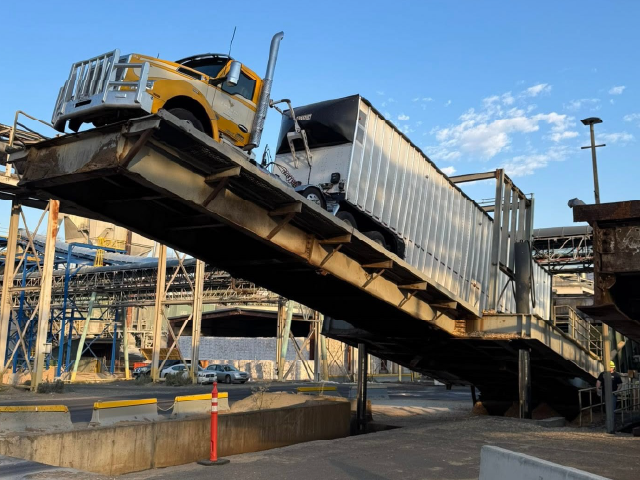
When a truck tipper is undersized, poorly matched to the material, or built without enough structural margin, the problem shows up fast - slower unload cycles, material hang-up, excess maintenance, and safety exposure around every load. That is why evaluating truck tipper manufacturers is not just a sourcing exercise. For most industrial buyers, it is a decision that affects throughput, labor, uptime, and risk for years.
In this market, the lowest price rarely tells the full story. A tipper that handles dry aggregate may struggle with wet bark, packed scrap, municipal waste, or sticky industrial byproducts. A unit designed around standard truck geometry may not perform well when trailer lengths, axle placement, or site approach conditions vary. The manufacturer matters because the manufacturer determines how much engineering discipline, fabrication quality, and application knowledge is built into the equipment before it ever reaches your site.
What separates strong truck tipper manufacturers
The best truck tipper manufacturers do more than fabricate steel and install cylinders. They engineer around the unloading problem itself. That means understanding the material characteristics, truck dimensions, operating frequency, discharge height, site layout, and safety requirements before design decisions are finalized.
A capable manufacturer will ask detailed questions early. They will want to know whether the material bridges, compacts, freezes, or shifts unpredictably. They will ask about load weights, trailer styles, floor construction, and whether operators unload a few times per day or in continuous production cycles. If those questions never come up, that is usually a warning sign. Truck tipping equipment performs best when it is built around the real operating environment, not around a generic catalog assumption.
Manufacturing control is another major differentiator. In-house design, fabrication, hydraulic assembly, and final testing generally lead to better consistency than a model that relies heavily on outsourced subassemblies without close engineering oversight. For industrial buyers, that translates into clearer accountability, tighter quality control, and fewer surprises during installation and startup.
Engineering depth matters more than brochure claims
A truck tipper is a high-force hydraulic structure. Its value depends on how well the frame, platform, pivot arrangement, hydraulic power unit, and cylinder system work together under load. The engineering question is not simply whether the tipper lifts. It is whether it lifts repeatedly, under real operating conditions, without introducing avoidable wear, instability, or structural fatigue.
This is where experienced manufacturers stand apart. They account for dynamic loading, off-center load conditions, frame deflection, cycle demands, and the interaction between the truck and the platform during elevation. They also design for maintenance access and serviceability, which often gets overlooked during purchasing but becomes very important after commissioning.
For example, a facility unloading light, free-flowing material may prioritize cycle speed and throughput. A facility handling wet wood waste or contaminated bulk solids may need a different balance of lift angle, retaining features, hopper interface, and platform construction. Neither application is inherently more difficult, but each requires different engineering choices. A manufacturer that treats both as the same project is likely to miss important performance details.
Build quality should be visible in the structure
Industrial buyers should expect evidence of heavy-duty construction, not just statements about durability. Frame design, weld quality, reinforcement strategy, deck construction, hydraulic component selection, and corrosion protection all indicate whether a manufacturer is building for demanding duty or for light commercial use.
Structural sections should be appropriate for the expected loads and cycle frequency. Welds should reflect disciplined fabrication practices, especially at high-stress areas such as pivots, cylinder mounts, and transition points in the platform frame. Hydraulic routing should be protected from damage and designed with maintenance practicality in mind. None of these details are cosmetic. They directly affect reliability and equipment life.
It also pays to ask how the manufacturer handles nonstandard duty conditions. If your operation works outdoors year-round, deals with abrasive material, or unloads in corrosive environments, the protective systems and structural allowances may need to be upgraded. Strong manufacturers are usually prepared for that conversation. Weak ones tend to default to a standard package whether it fits or not.
Safety is part of the design, not an add-on
Serious truck tipper manufacturers build safety into the equipment architecture. That includes load restraint strategy, platform stability, operator control logic, emergency stops, maintenance lockout provisions, and safe access for inspection and service.
The right safety approach depends on the unloading process. In some applications, controlling vehicle movement during elevation is critical. In others, personnel separation, remote control operation, or hopper integration drives the design. Site-specific factors matter as much as the machine itself. Grade changes, traffic flow, confined operating areas, and existing structures can all influence what safeguards are necessary.
This is another area where application experience matters. A manufacturer with real field knowledge will discuss failure modes, operator behavior, and maintenance realities instead of relying on generic safety language. That level of practical detail usually reflects a more mature design process.
Customization is often necessary, not optional
Many industrial facilities do not have the luxury of designing a process around standard equipment. They need equipment designed around an existing pit, hopper, elevation limit, truck fleet, or discharge requirement. That is why customization is one of the clearest indicators of manufacturer capability.
Customization does not always mean a completely one-off machine. In many cases, it means adapting a proven base design with modified platform dimensions, cylinder sizing, control features, structural reinforcement, discharge geometry, or integration with downstream equipment. A manufacturer that can make those adjustments efficiently is often a better long-term partner than one that only offers fixed catalog models.
American International Inc operates in this part of the market, where standard and custom-engineered unloading systems need to perform in difficult bulk handling environments. For buyers with unusual material behavior, tight site constraints, or high-cycle demands, that engineering flexibility can have more value than a lower initial quote from a less specialized supplier.
Questions to ask truck tipper manufacturers before you buy
A productive vendor discussion should move beyond price early. Ask what materials the equipment has handled successfully and what changes are recommended for your application. Ask how the frame, hydraulic system, and controls are sized for your expected loads and cycle counts. Ask what assumptions are being made about truck dimensions, center of gravity, and unloading conditions.
It is also worth asking how much of the manufacturing process is controlled in-house, what testing is performed before shipment, and what support is available during installation and startup. Replacement parts availability, hydraulic component sourcing, and response time for service questions matter more on capital equipment than many buyers initially expect.
If a manufacturer gives broad answers without requesting application data, that should be taken seriously. The better suppliers usually want drawings, load details, photos, and process information because that data reduces performance risk.
Lifecycle cost is usually where the real difference appears
On paper, two truck tippers may look similar. Over time, the differences tend to show up in downtime, maintenance labor, hydraulic performance, structural repairs, and how well the system handles actual material variation. That is why lifecycle cost is a better evaluation tool than purchase price alone.
A heavier-duty machine may cost more initially but reduce service interruptions in a high-volume environment. A better-engineered hydraulic system may improve cycle consistency and lower wear. A custom fit to the application may prevent chronic loading issues that otherwise consume operator time every day. These gains do not always fit neatly into a sales quote, but they affect operating cost in very real ways.
The right choice depends on your duty cycle, material behavior, and tolerance for downtime. A lower-cost standard unit may be acceptable for occasional use and predictable material. A continuous industrial operation usually needs more structural capacity, more engineering margin, and stronger manufacturer support.
Choosing a manufacturer that fits the application
The best purchasing decisions usually come from matching the manufacturer to the complexity of the unloading problem. If your operation handles difficult material, unusual vehicles, or demanding throughput targets, specialized experience should carry significant weight. If your process is simpler, a more standardized solution may be enough. The key is being honest about duty requirements before the equipment is specified.
Truck tipping equipment works hard, often in dirty, abrasive, and unforgiving environments. Buyers should expect manufacturers to speak clearly about limits, design assumptions, and trade-offs. That kind of conversation is usually a sign that the equipment has been engineered for real industrial service, not just sold for it.
A good manufacturer does not simply promise that the machine will lift the load. They show how the design supports safe, repeatable unloading under the conditions your operation actually faces every day. That is the standard worth buying to.

