


Made in USA Material Handling Equipment
June 10, 2026
When a bulk unloading system becomes the bottleneck, the problem is rarely just capacity. It is usually a mix of material behavior, truck variability, site constraints, maintenance exposure, and safety risk. That is where made in USA material handling equipment matters most. For industrial operators moving wood waste, recyclables, sludge, aggregates, agricultural products, or other difficult bulk materials, equipment quality shows up in uptime, throughput, and service life.
Imported equipment can look comparable on paper. In practice, the difference often appears after installation, when the machine is asked to work through off-center loads, abrasive material, changing trailer configurations, or demanding duty cycles. Buyers responsible for production targets and maintenance budgets are not simply purchasing steel and hydraulics. They are purchasing control over risk.
Why made in USA material handling equipment matters
For heavy-duty bulk unloading applications, domestic manufacturing affects more than country of origin. It influences engineering communication, fabrication oversight, component fit, lead time visibility, and post-sale support. Those details become significant when the equipment is a truck dumper, trailer tipper, container tipper, hopper, or a semi-portable unloading system expected to operate daily under real plant conditions.
A U.S.-based manufacturer can typically maintain tighter control over design revisions and fabrication quality because engineering, production, and testing are closer together. That matters when a project requires custom deck dimensions, hydraulic power adjustments, heavier structural members, or integration with hoppers, conveyors, controls, and guarding. If the application is straightforward, a standard unit may be the right answer. If the material bridges, shifts, clings, or impacts the structure unpredictably, a custom-engineered approach is often the safer investment.
There is also a practical procurement advantage. Domestic manufacturing can simplify technical review, factory communication, service coordination, and replacement part planning. Not every facility needs that level of access, but operations with continuous throughput demands usually do.
What industrial buyers should evaluate first
The right equipment selection starts with material and process data, not catalog categories. A truck unloading system that performs well for dry chips may be a poor fit for wet biosolids or compacted municipal waste. Material density, moisture, particle size, stickiness, bridging tendency, and impact behavior all affect equipment design.
Truck and trailer variation is the next major variable. Floor type, axle spacing, trailer length, body construction, center of gravity, and load distribution influence deck design, lift geometry, restraint methods, and hydraulic requirements. Even within one fleet, variations can be large enough to change the specification.
Site conditions matter just as much. Indoor versus outdoor installation, pit versus above-grade configuration, available footprint, loading traffic, discharge height, and access for maintenance all affect the final design. Buyers sometimes focus on lifting capacity first and leave the surrounding system for later. That can create problems. The dumper, hopper, and downstream flow path need to function as one system.
Core categories of made in USA material handling equipment
In bulk unloading applications, the most common equipment categories are hydraulic truck dumpers, trailer tippers, container tippers, hoppers, pumping units, telescopic cylinders, and portable or semi-portable unloading platforms. Each serves a distinct role, but they are often specified together.
Truck dumpers and trailer tippers are built to raise the load safely and consistently so material can discharge by gravity. Their value is straightforward when manual unloading is slow, unsafe, or inconsistent. In many facilities, replacing partial hand-cleanout and repeated truck repositioning with a properly engineered tipping system improves cycle time and reduces labor exposure.
Container tippers address a different handling profile. They are often used where bins, boxes, or specialized containers must be elevated and discharged into process equipment, hoppers, or transfer points. Here, the design challenge is usually not just lift capacity. It is controlled dumping, secure retention, and alignment with the next stage of material flow.
Hoppers are often underestimated during procurement. A heavy-duty hopper is not just a receiving box. Its geometry, liner selection, wear zones, discharge opening, and interface with conveyors or feeders have a direct impact on bridging, spillage, and equipment wear. For abrasive or irregular materials, hopper design can determine whether the unloading system performs smoothly or creates a maintenance problem.
Hydraulic pumping units and telescopic cylinders are equally important because they drive motion, stability, and reliability. In demanding duty cycles, hydraulic design affects lifting speed, heat management, control precision, and long-term maintenance requirements. Oversimplified power unit specifications may reduce upfront cost, but they can increase stress on components and create avoidable downtime.
Standard equipment versus custom-engineered systems
Not every application requires a fully custom build. Standardized equipment can be the right choice when the material is predictable, the truck fleet is consistent, and the installation conditions are known. Standard units often reduce design time and can provide a faster path to production.
But in many industrial facilities, the unloading environment is not standard. Materials may be wet one season and dry the next. Loads may arrive inconsistently packed. Older sites may have restricted foundations, limited height, or unusual traffic flow. In those cases, forcing a standard machine into a nonstandard application can shift the burden onto operators and maintenance staff.
Custom engineering becomes valuable when the equipment must match the process instead of the process adapting to the equipment. That may include changes to deck width and length, cylinder configuration, structural reinforcement, hopper capacity, control logic, portability, or guarding. It may also involve designing around difficult materials that hang up, impact heavily, or require controlled discharge into downstream equipment.
The trade-off is simple. Custom systems require more front-end technical review, but they often reduce long-term operating friction. For buyers managing a system over many years, that trade-off can be favorable.
Durability is a design issue, not a slogan
Industrial buyers hear a lot of claims about heavy-duty construction. The real question is what that means in fabrication and design. For made in USA material handling equipment, durability should be visible in structural sizing, weld quality, reinforcement at high-stress points, cylinder mounting strategy, deck design, hinge construction, hydraulic component selection, and wear surface treatment.
It should also show up in serviceability. A durable system is not only built to resist failure. It is built to be maintained without unnecessary shutdown time. Access to hydraulic components, replaceable wear areas, practical hose routing, and clear inspection points all matter in the field.
This is especially true in industries such as recycling, forestry, waste processing, and agriculture, where contamination, moisture, impact loading, and abrasive materials accelerate wear. Equipment that looks adequate in a clean demonstration environment may not hold up under those conditions. Serious buyers usually evaluate the machine by asking how it will behave after years of repetitive loading, not how it appears on delivery day.
Safety and throughput usually rise together
There is a tendency to treat safety features and production performance as separate buying criteria. In unloading systems, they are often closely linked. Equipment that restrains the vehicle correctly, lifts predictably, discharges cleanly, and returns to position without interruption tends to improve both operator safety and material flow.
Poorly matched systems create the opposite result. Operators spend more time correcting placement, clearing residual material, addressing hang-ups, or working around unstable discharge behavior. Every one of those interventions adds exposure and slows the cycle.
That is why engineered controls, sound structural design, and application-specific geometry matter. Safer operation is not just a function of guards and warning labels. It starts with equipment that behaves consistently under real loading conditions.
Choosing a manufacturer, not just a machine
For capital equipment in this category, the manufacturer’s process is part of the product. Buyers should look for a partner that asks detailed questions about material characteristics, vehicle dimensions, unloading frequency, foundation conditions, and downstream equipment. If those questions are missing, the design process may be too generic.
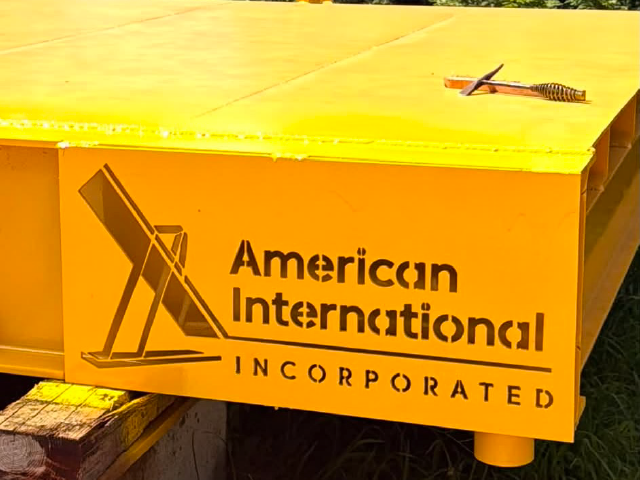
A manufacturer with in-house engineering and fabrication control is typically in a stronger position to adjust details that affect field performance. That includes structural revisions, hydraulic tuning, integration with receiving hoppers, and accommodations for unusual unloading conditions. American International Inc is one example of this model, focused specifically on heavy-duty dumping and tipping equipment for demanding industrial applications.
The best buying decision usually comes from matching three things: the actual material, the actual operating environment, and the actual duty cycle. When those factors are aligned with domestically built equipment and a manufacturer that understands the application, the result is not just a machine that lifts. It is a system that supports production with fewer compromises.
If your unloading process handles difficult materials every day, the most useful question is not whether made in USA equipment carries value in theory. It is whether the system in front of you is engineered to keep working when the material, the load, and the operating conditions are less than ideal.

